This won’t be a cheerful story, but it is an important one. Pet remembrance photography lives in that quiet space where you don’t “capture memories” so much as you protect them from disappearing too fast, forever. And sometimes, the whole job is simply this: show up, stay steady, and don’t waste a second of the little time that’s left. Its emotional weight can far exceed that of any cheerful story.
Table of Contents
One early October morning, Perun’s people reached out. Perun was counting his days, and they needed this session now. So I came later that same afternoon. They’re local here in the Poconos, and we worked the way reality demanded: we chased the last usable daylight in their backyard first, then moved inside when the light ran out, and the body runs out faster than the sun does.
They asked for black and white. Color can feel like noise. Black and white simplifies everything down to what matters: hands, fur, eyes, breath, weight, trust.
Perun’s full name (as requested) is Perun Von Folkvangr, and he’s a German shepherd.
Same-day sessions are different
Same-day work has a different pulse. You’re moving fast, but you’re not rushing the people in front of you. It’s a weird combo: urgency in logistics, gentleness in everything else.
We started outside because the backyard was still holding light. There’s an image of Perun with his owner outdoors that sets the tone right away: a strong, quiet man sitting with his dog at his side, harness visible, the woods behind them like a backdrop that doesn’t need to perform. The framing stays simple because the bond is the story.
Another outdoor frame shows both owners with Perun close to the ground, everyone leaning into the same emotional gravity. No forced smiles, no “say cheese,” just presence. That’s what pet remembrance photography looks like when it’s honest: people and animal sharing the same small circle of time, trying not to spill it.


The harness tells the truth
Perun couldn’t move on his own. His back legs had already failed. That’s why the harness is there, as a lifeline. It let his people support him, lift him, reposition him, keep him comfortable. I didn’t hide it. The harness is part of the story. It’s also proof of something you can’t fake: how much work they were already doing, daily, quietly, without applause.
A lot of photography advice on the internet is about removing distractions. But in pet remembrance photography, the “distractions” are often the most important details. The harness is care.
Close frames, not invasive frames
Once we were outside and settled, I moved closer. Several images are tight, intimate compositions: Perun’s head cradled in hands, a cheek pressed to fur, a forehead against his face. One frame is almost entirely Perun’s eyes and muzzle, with hands supporting him from both sides. Another shows his paws and their fingers intertwined, like everyone is trying to hold onto a single shared minute.
This is where black and white really earns its place. You see texture: the worn softness of fur, the tension in knuckles, the tiny highlights on a nose, the way a dog’s expression can look both tired and completely trusting at the same time.
There’s also a practical reason I shoot tighter in sessions like this: it lowers the pressure. When people are emotional, wide shots can feel like a stage. Close shots feel like a whisper.


Moving indoors, where the “real” home story lives
Once we moved indoors, the space became smaller, softer, and more familiar. Indoors is where people stop “posing” and start simply being.
You can see it on the couch images. One shows Perun’s head resting on the cushion while one owner leans in close, cheek pressed against his. Another shows the other owner stretched along the couch, one arm draped protectively, face lowered, eyes focused on Perun like he’s trying to memorize him.
Those frames don’t need complex lighting, they don’t need tricks. They need time, calm breathing, and permission for people to be exactly where they are emotionally.
What I also did in post-production, though, was add a subtle vignette and brush the brighter parts around Perun with a darker tone to help him stand out.
And because they asked for black and white, the couch textures and the softness of that indoor light become part of the storytelling. Black and white also keeps it from feeling “social media cute.” This wasn’t that kind of day.


Bringing the younger dog into the frame
They have another dog, younger, and she appears in the images too. I’m glad she does. It’s real life. Families don’t pause existing just because one member is at the end.
In one indoor scene, Perun is settled on the floor near his person, and the younger dog is nearby, calm and present. It’s one of those frames that says a lot without making a speech: the family is gathered the way they always gather, just with more awareness of what this day means.
That’s another thing pet remembrance photography can do well when handled carefully: show the full context without turning it into a statement.


The tribute smiles
Here’s something people don’t always expect: there are moments where the owners smile.
Not “party smiles.” Not “everything is fine” smiles. More like kindness. A tribute to Perun’s happy, active life. A way of saying, “You were good. You were ours. Thank you.”
There’s a photo where both dogs are present, and the owners are interacting with them in a way that feels familiar, almost routine, and you can see that warmth show up. That image matters because it protects the story from becoming one-dimensional. Perun wasn’t only an ending. He was years of living. And the smiles are how you keep the entire book, not just the last page.

The TV pose homage
One image has a special backstory: the pose Perun and his owner used during many evenings watching TV.
They told me this mattered, so I treated it like it mattered. The framing stays wide enough to show the environment: the couch, the floor, the way Perun rests. It’s not flashy, not even trying to be “beautiful” in the traditional sense.
That’s the kind of detail families remember years later. Not the perfect portrait, but a regular Tuesday night posture. The “this is how we were together” posture. In pet remembrance photography, those homages can be the most healing images of all, because they don’t feel like a goodbye scene, they feel like home.

The hand and paw image
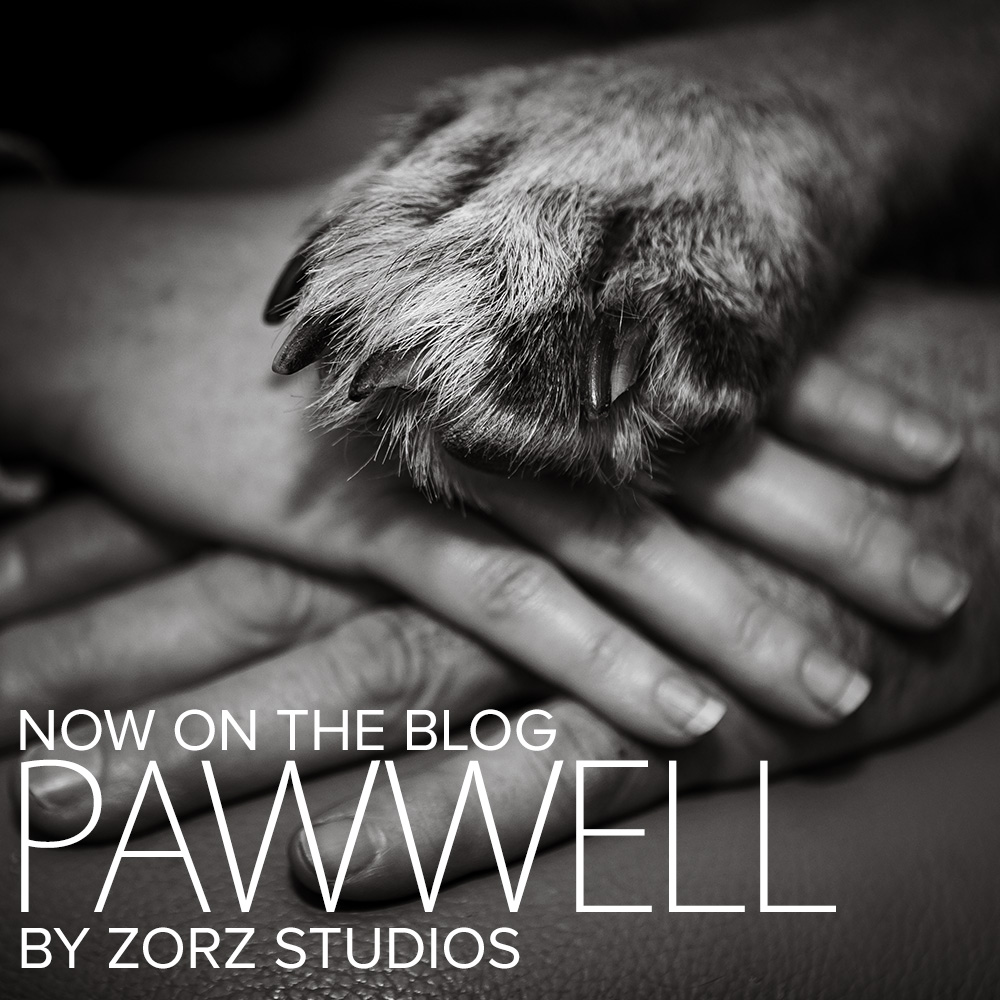
Another frame with a very specific intention: the connection between two males, two strong souls, buddies. The owner is a big, tall, strong man, and I wanted the dog’s paw to read almost like a bear’s paw in his hand.
That image is simple and powerful: a large human hand holding Perun’s paw, close enough that you can feel the weight and scale. No faces or background, just the bond.
I love images like that because they communicate without performing. It’s not as much sentimental. It’s loyal, physical. It says, “I’m here. I’ve got you.” If you’re building a narrative around the photos, that frame is a cornerstone. It’s also one of those shots that makes pet remembrance photography understandable to someone who’s never heard the term.

A note about my own history with hard stories
This session brought me right back to my years volunteering with NILMDTS (Now I Lay Me Down to Sleep) in NYC, where time was already gone, where photographers quietly help families preserve the only images they may ever have of their baby. Different situation, different grief, but a similar responsibility: arrive with respect, move gently, and deliver something that becomes priceless.
Those numerous hospital visits taught me something I still carry into sessions like this: when people invite you into a moment that hurts, you don’t “cheer them up.” You just do your job with care, and you let the photos hold what words can’t.
That same mindset is why I’m careful with pet remembrance photography. It’s a real family asking you to help them keep someone they love.
The day after
Perun passed the following day.
I’m saying that plainly because it’s part of the truth, and because it explains the urgency without needing extra drama. They reached out early in the morning, I came that afternoon, and by the next day he was gone. That’s what “before time ran out” meant here, literally.
If you’ve ever been close to an animal at the end, you know how strange that last day feels. Everything looks normal, but nothing is. You keep doing normal actions because that’s the only way to stand upright: you pet them, you sit beside them, you speak softly, you take one more photo, you hold one more paw.
That’s why pet remembrance photography exists. Not to romanticize the end, but to honor the love that filled the middle.

What I want people to take from this
If you’re reading this while your own pet is still here, even if they’re older, even if they’re slowing down, you don’t need to wait for a crisis. Pet photography can be joyful, wild, goofy, muddy, elegant, ridiculous, and everything in between. It can be a celebration of life, not only a farewell.
But if you’re in the hard season right now, and time feels tight, I want you to know this kind of session can be gentle, it can be at home. It can be calm. It can be respectful. It can include smiles, because smiles belong to the story too.
That’s the balance I care about: all pet sessions, from happiness to grief, treated with the same seriousness and warmth.
If you’d like to see more of how I photograph animals beyond this one story, my pet portfolio lives here.
A quick note for my longtime readers
I’ve written before about photography intersecting with subjects that are vulnerable, uncomfortable, or easy to misunderstand, not to provoke, but because these stories exist whether we look away or not. If you’re curious, one example is this older post (not a merry one).
This Perun session belongs in that same category of “real life, handled carefully,” even though the subject is completely different. The common thread is respect, and the refusal to turn someone’s pain into a spectacle.
Pet remembrance photography in practice
A few practical truths, if you’re wondering what a session like this can look like:
- It can be scheduled fast, even same-day, if time is short
- It can happen at your home, where your pet feels safest
- Mobility limits don’t disqualify your pet from being photographed (harnesses, blankets, couches, arms, all of it can be part of the story)
- You don’t have to perform grief, you can be quiet, you can laugh, you can smile, you can just be there
- Black and white can be a powerful choice when you want the images to feel timeless and focused on connection
The ending
Perun Von Folkvangr was loved. You can see it in every frame: the hands supporting him, the faces close to his, the quiet willingness to sit on a floor and just stay there, the way the younger dog remains nearby, the way smiles sneak in when memory wins over fear.
I walked into their home that afternoon as a photographer, but I left reminded of something simple: sometimes the most important photos are not the ones that look impressive. They’re the ones that make a family say, years later, “Yes. That’s exactly how it was. That’s exactly us.”
And that’s the point of pet remembrance photography.


Owners’ Feedback
Here’s what the owners wrote after they prepared themselves for viewing:
We’re sitting together now, I’m drinking Scotch, she has a glass of wine, and there are tears in both of our eyes… that is exactly how we know you did everything right—gently and with immense tact during the photo session.
From the bottom of our hearts, thank you for being the one who was there with us in that moment. We couldn’t imagine anyone else in your place.Perun's owners